
Table of Contents
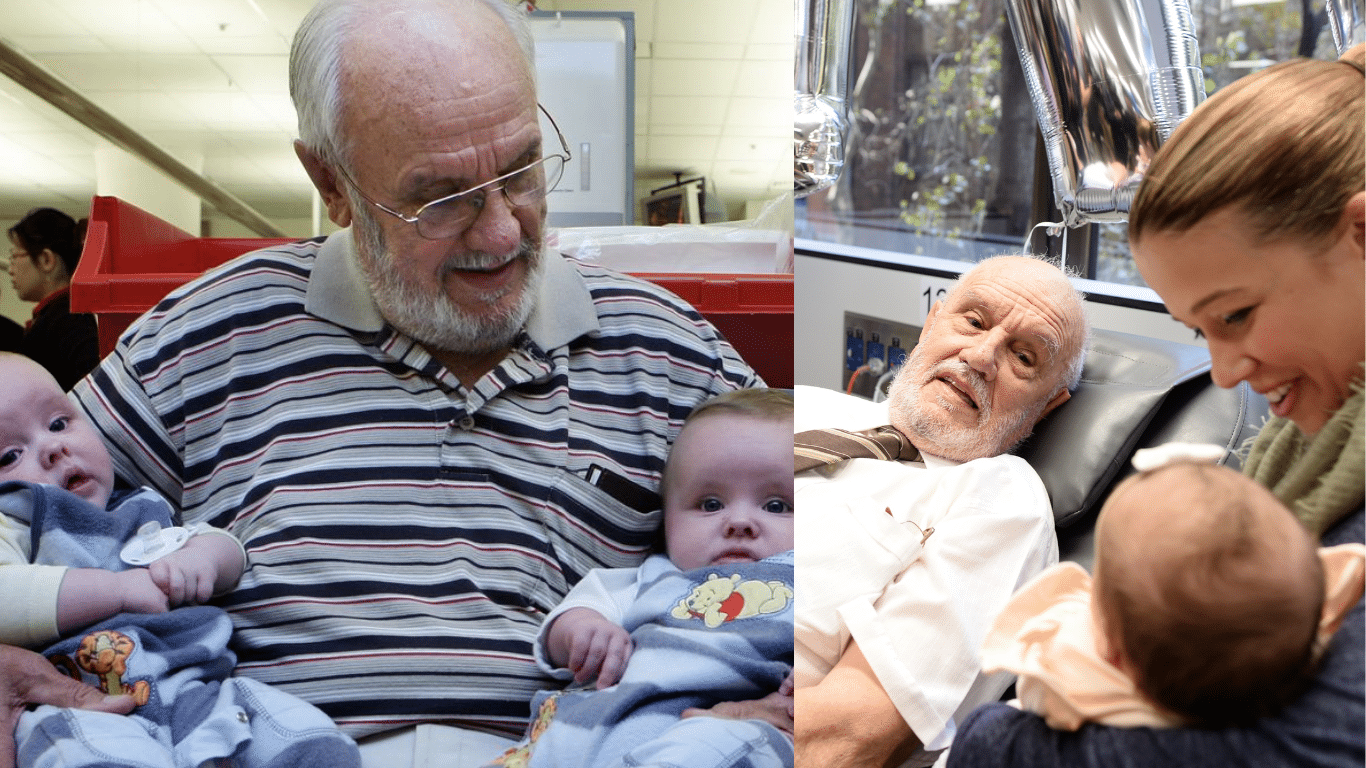
James Harrison — the Australian man whose rare blood plasma helped save the lives of more than two million babies worldwide — has died at the age of 88. His remarkable legacy as one of the most important blood donors in modern history has been hailed by medical professionals, families and humanitarian groups around the world.
Harrison passed away peacefully in his sleep on 17 February 2025 at a nursing home in Umina Beach, New South Wales. What began as a personal decision to give back turned into an extraordinary lifetime commitment — one that transformed prenatal healthcare for countless families.
🩸 From a Young Blood Recipient to a Lifesaving Donor
:max_bytes(150000):strip_icc():focal(599x0:601x2)/james-harrison-tout-030325-5aa671d086d14673aa527871f9e901f9.jpg)
Harrison’s journey into blood donation began with a life‑changing event of his own. At the age of 14, he underwent major chest surgery and received multiple blood transfusions. Deeply moved by the support he received, he vowed that once he reached the eligible age, he would become a blood donor himself.
At 18, he started donating blood and plasma, a commitment he upheld biweekly for more than 60 years — making 1,173 lifetime donations before he retired at age 81 due to Australia’s age limit for donors.
🧬 The Rare Antibody That Changed Lives
What made Harrison’s contributions uniquely lifesaving was not just his consistent generosity — it was the quality of his blood. His plasma contained a rare antibody known as Anti‑D, vital in the production of a medication used to prevent hemolytic disease of the fetus and newborn (HDFN), a devastating condition affecting babies born to Rh‑negative mothers carrying Rh‑positive babies.
Before the development of this treatment, HDFN caused severe anemia, jaundice, heart failure and even fetal death in affected pregnancies. The Anti‑D immunoglobulin derived from Harrison’s plasma became a cornerstone of prenatal care — dramatically reducing those tragic outcomes and helping millions of babies around the world survive and thrive.
🧠 Why He Was Called the ‘Man with the Golden Arm’
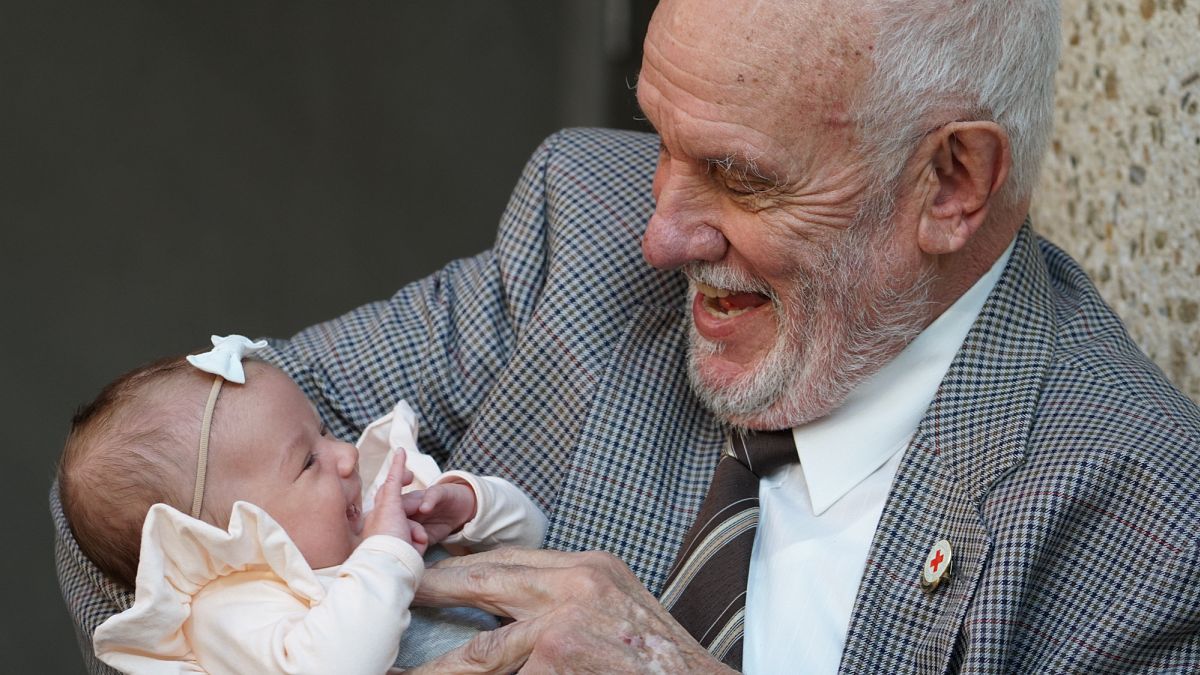
Harrison’s extraordinary impact led to a fitting nickname: the “Man with the Golden Arm.” Not only did this name reflect the incredible value of his donations, but it also symbolised his steadfast commitment to saving lives, one donation at a time.
Medical experts have noted that Harrison’s Anti‑D plasma was so rare that, for decades, the vast majority of the world’s supply of the lifesaving antibody came from his donations. In Australia alone, the treatment that used his plasma is credited with saving the lives of countless newborns.
Even as other donors with the Anti‑D antibody were found later in life, none could match the sheer volume and consistency of Harrison’s contributions. His donations enabled the manufacture of an estimated 2.4 million doses of Anti‑D immunoglobulin over his lifetime — a staggering figure that underscores the scale of his impact.
👶 A Legacy Written in Lives Saved
Harrison’s influence wasn’t just statistical — it was deeply personal. His daughter, Tracey Mellowship, publicly shared how the same medication developed from his blood helped members of their own family, including herself and two grandchildren during their pregnancies. Those personal stories reinforced just how direct and profound his contributions were.
Stephen Cornelissen, CEO of Australia’s Lifeblood (formerly Australian Red Cross Blood Service), described Harrison as a “remarkable, stoically kind, and generous person who was committed to a lifetime of giving.” His words echoed what many families affected by HDFN had felt: gratitude for a man whose quiet devotion made a monumental difference in their lives.
🧪 How Anti‑D Treatment Changed Prenatal Care
The Anti‑D injection made possible by Harrison’s plasma works by preventing Rh‑negative mothers’ immune systems from producing antibodies that attack their Rh‑positive babies’ red blood cells — the core mechanism behind hemolytic disease of the fetus and newborn. This condition was once a common and often fatal complication of pregnancy.
With regular administration of Anti‑D immunoglobulin during and after pregnancy, cases of severe HDFN have become rare in countries with access to the treatment — a shift that saved countless lives and prevented intense suffering for families around the world.
🌍 A Model of Altruism for the World
Harrison’s legacy is also a reminder of what individual compassion can achieve on a global scale. At a time when public attention often focuses on breakthroughs in medicine and technology, his story highlights the power of ordinary generosity — one man choosing to help others without fanfare, expecting nothing in return.
His life’s work serves as a testament to the impact of blood donation broadly, a cause that many health organisations continuously advocate for. In Australia today, Lifeblood still seeks donors with rare blood characteristics like Anti‑D, with fewer than 200 such donors nationwide helping tens of thousands of mothers and babies every year.
🧡 Remembering a Life of Giving
James Harrison’s death has been marked by heartfelt tributes from medical professionals, families who owe their children’s lives to his donations, and the broader community inspired by his decades of service. While his arm may have finally rested, the impact of his courage and devotion endures in every life saved through his blood.
He is survived by his daughter, two grandsons, and four great‑grandchildren — a family living testament to a legacy that will continue to be felt through future generations.
