
Table of Contents
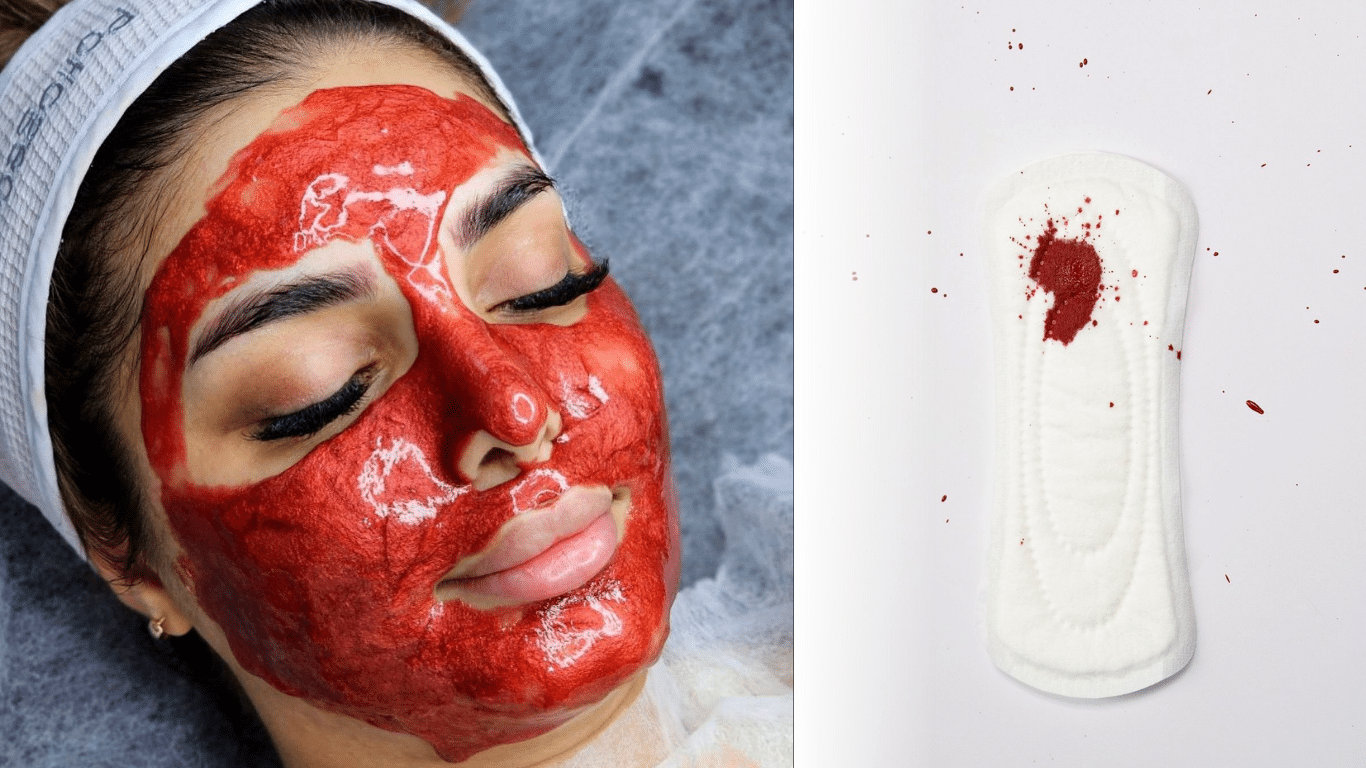
A controversial new beauty trend has been circulating on social media recently in which some women are applying their own menstrual blood directly to their faces — claiming it gives them a natural glow, reduces acne and rejuvenates their skin. This phenomenon, often tagged as “menstrual masking,” has made waves on platforms like TikTok and Instagram, with videos showing users collecting their period blood and using it like a DIY face mask.
But even though the trend is shocking, dermatologists and skin experts strongly discourage it — pointing out serious safety, hygiene and skin‑health risks.
🌙 What Is the Trend?

Menstrual masking is exactly what it sounds like: people apply their own period blood on their face for a few minutes before washing it off, with the belief that it can improve skin texture, reduce inflammation, heal blemishes and give a “natural glow.” Influencers promoting it often point to the idea that menstrual blood contains stem cells, proteins and healing molecules — the same components that supposedly help the uterus rebuild itself each month.
Some videos even liken the trend to the well‑known “vampire facial” (a professional treatment using platelet‑rich plasma) — but without any of the clinical steps used in dermatology offices.
❗ What Experts Are Saying — The Risks Are Real

While the menstrual masking trend may sound radical or empowering, medical professionals warn that it lacks any credible scientific backing and may actually do more harm than good. Here’s why:
🧪 1. Period blood is not sterile — Unlike controlled medical products or lab‑processed serums, raw menstrual fluid passes through the vaginal canal and can contain bacteria, fungi and other microorganisms that may lead to skin irritation, infections, breakouts and inflammation when applied to facial skin.
🧬 2. No proven skincare benefit — Although menstrual blood does contain certain cells and proteins, there is no clinical evidence showing that smearing it on the skin improves complexion, reduces acne, boosts collagen, or slows aging the way influencers claim. Any regenerative potential in menstrual‑derived stem cells is being explored in sterile laboratory research — not as a DIY home beauty practice.
🦠 3. Risk of bacterial or fungal infection — Experts caution that applying raw bodily fluids to skin can disrupt the skin’s natural microbiome, potentially worsening acne, causing dermatitis, or triggering serious infections — especially if there are small cuts, open pores, or sensitive skin areas.
🧑⚕️ 4. Confusion with medical procedures — Professional skin treatments like PRP (platelet‑rich plasma) facials involve sterilised blood draw, centrifuge processing and controlled application by trained clinicians. The menstrual masking trend is not the same as these evidence‑based procedures, and mimicking them at home can be dangerous.
🧠 Why the Trend Took Off
Part of the appeal comes from:
-
The “natural” or body‑positive idea that your own biological material could heal or enhance your skin.
-
Shock value and viral curiosity — once people see something unusual on TikTok or Reels, they’re tempted to try it or talk about it.
-
Misunderstandings about scientific studies that explore components of menstrual blood under controlled lab conditions but don’t endorse DIY skincare use.
But virality doesn’t equal validity — and what works in a lab under sterile conditions doesn’t translate to safe home skincare.
💡 What Real Dermatologists Recommend

Rather than turning to unproven and potentially harmful DIY trends, skin experts urge people to stick with:
✔ Evidence‑based skincare products containing ingredients like vitamin C, retinoids, hyaluronic acid, niacinamide and sunscreen
✔ Cleanser + moisturiser routines suited to your skin type
✔ Regular exfoliation and protection from UV exposure
✔ Professional treatments only from licensed dermatologists or aestheticians when appropriate
These approaches have decades of research and clinical testing behind them — unlike menstrual masking, which has no scientific proof of benefit and carries genuine health risks.
🧩 The Bottom Line
The viral “period blood face mask” trend — aka menstrual masking — might be grabbing attention online, but dermatologists consistently warn against it. Raw menstrual blood is not a sterilised cosmetic ingredient, and applying it to your face can introduce bacteria, irritation and potential infections without offering any proven skin benefits.
So before following the latest beauty hack blowing up on social platforms, it’s wise to ask: Is this safe? — or just sensational? In this case, the science is clear: skip the period mask, and stick with evidence‑based skincare that’s been tested for safety and effectiveness.
