
Table of Contents

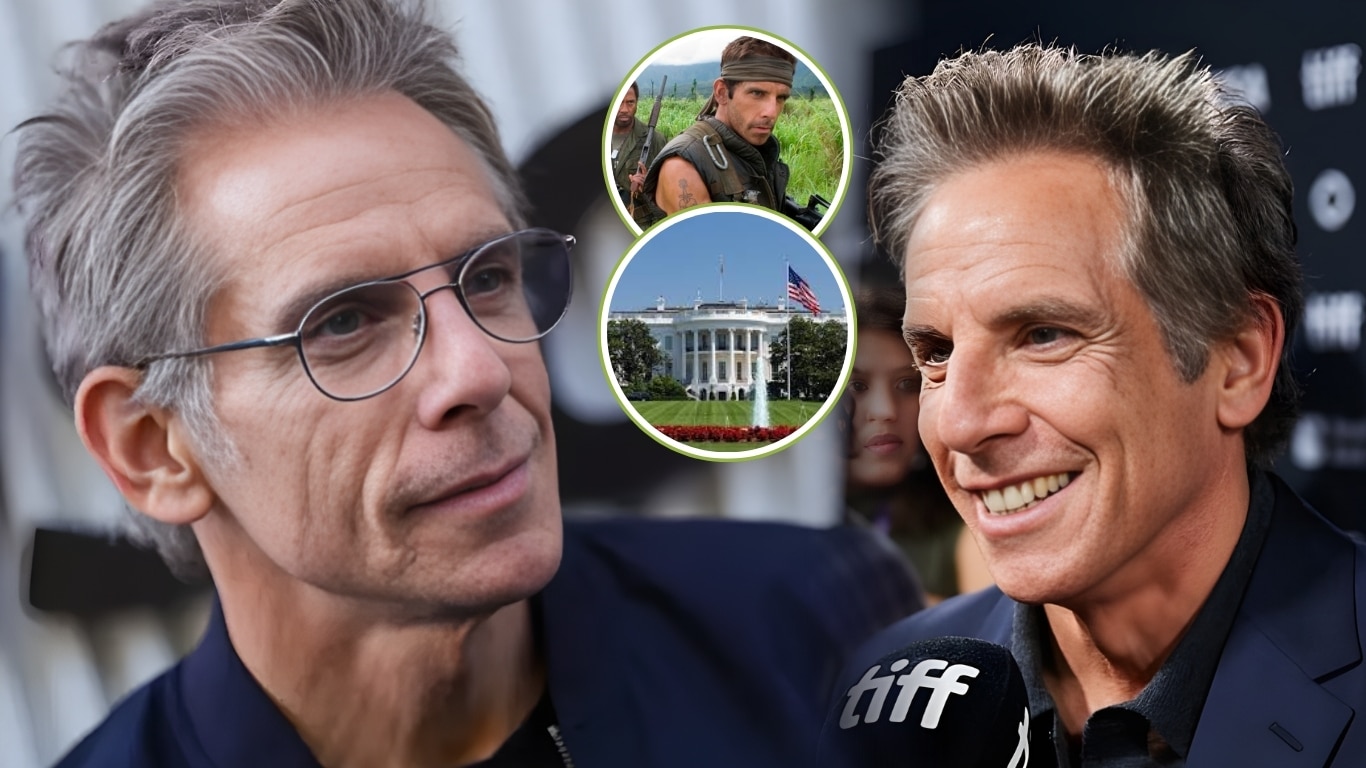
In early March 2026, Hollywood actor and filmmaker Ben Stiller ignited a firestorm of public discussion after he publicly reprimanded the White House for including footage from his 2008 satirical film Tropic Thunder in a controversial pro‑war social media video. Stiller’s remarks captured broader frustrations about the blending of entertainment media and political messaging — especially at a time of real world conflict.
The dispute centers on a 42‑second video posted by the official White House account on X (formerly Twitter), captioned “Justice the American way.” The montage mixed real, unclassified drone footage of recent U.S. and Israeli military operations in Iran with clips from well‑known movies, TV shows, and video games — among them Iron Man 2, Top Gun, Braveheart, Breaking Bad, Star Wars, and the video game Halo. While the aim appeared to be to showcase America’s military might, many viewers were taken aback by the presentation and tone.
Stiller’s Statement: “War Is Not a Movie”

Ben Stiller, the director and co‑writer of Tropic Thunder, was among the most prominent critics of the montage. Taking to social media, he wrote directly to the White House: “Hey White House, please remove the Tropic Thunder clip. We never gave you permission and have no interest in being a part of your propaganda machine. War is not a movie.”
Stiller’s reaction was pointed and unambiguous. He focused less on the cinematic value of his film than on the ethics of using creative work in a context he clearly viewed as political propaganda. By saying “War is not a movie,” he emphasized the real human stakes of actual military conflict, distinguishing them from Hollywood’s fictionalized portrayals.
What Tropic Thunder Is — and Why Its Use Is Controversial
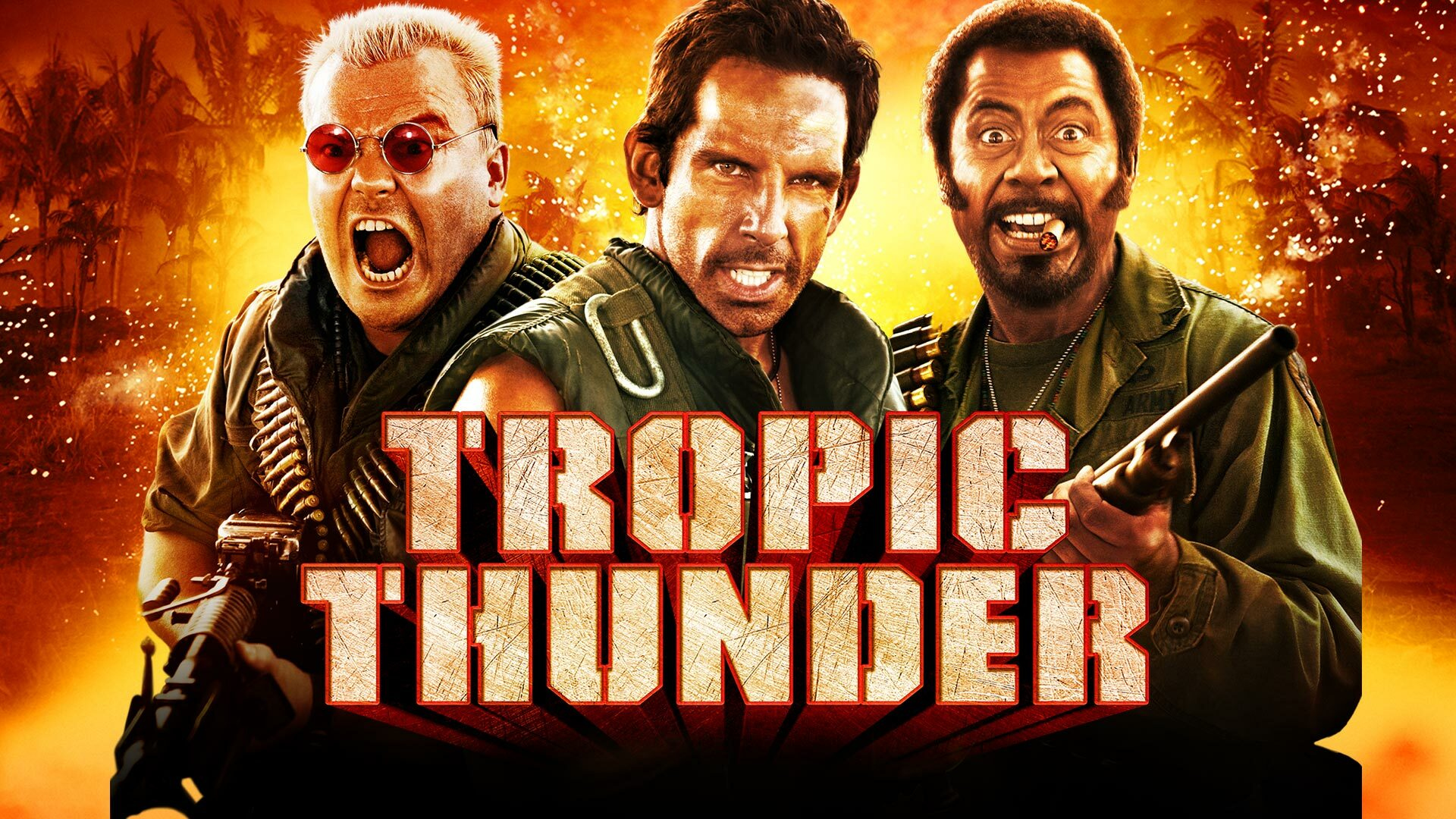
Tropic Thunder is a satirical action comedy that parodies Hollywood’s obsession with blockbuster war films and the absurd lengths actors and studios will go for success. Stiller not only starred in the film but directed and co‑wrote it; the ensemble also included actors like Jack Black and Robert Downey Jr.
The film was never intended to glorify war. Instead, it skewered the genre’s tropes and critiqued the entertainment industry itself. As such, Stiller and many of his supporters view its use in a video celebrating real‑life military operations as a stark departure from the movie’s original message — and a misrepresentation of the film’s intent.
The Broader Backlash from Artists and Creators

Stiller’s complaint did not occur in isolation. The White House has faced a cascade of objections from various artists over the use of their work in similar contexts. Pop star Kesha, for example, condemned the unauthorized use of her song “Blow” in a video that depicted fighter jets and explosions, calling the association “disgusting and inhumane.”
Other notable figures who have publicly protested the use of their music or likeness in government videos include Céline Dion, Bruce Springsteen, Linkin Park, Neil Young, Olivia Rodrigo, and Radiohead — all of whom have asked for their work to be removed from official posts.
Even outside the music and film industries, others reacted. Steve Downes, the voice actor of Master Chief from the Halo video‑game franchise, demanded the White House remove him from the video, calling the montage “disgusting and juvenile war porn.” His voice and related game footage were featured without consent, prompting him to publicly disavow participation.
The White House Response
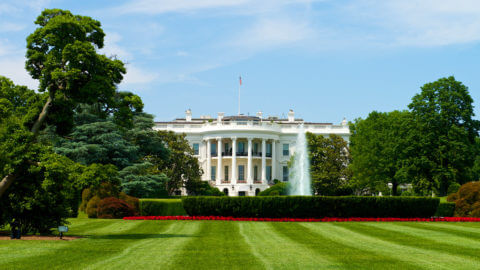
Despite the pushback, spokespersons for the Trump administration have largely doubled down rather than apologizing. White House communications director Steven Cheung responded to some of the criticism by suggesting that what critics see as negative attention has actually boosted views and engagement with the videos.
Such responses underscore a deeper fault line in how political communications teams utilize popular culture. Critics argue that inserting entertainment content into serious geopolitical messaging trivializes war and blurs the line between information and propaganda. Supporters of the clips, by contrast, claim they highlight U.S. strength and rally domestic support.
Why This Matters
At a time when international tensions — particularly between the United States, Israel, and Iran — are escalating, the optics of how conflict is presented matter intensely. Real lives are at stake, and many observers say reducing complex geopolitical struggles to a montage of cinematic clips risks trivializing suffering and war’s grave consequences.
Stiller’s remarks resonated with audiences because they touched on larger questions about consent, artistic integrity, and the moral responsibilities of both creators and political institutions. His stance — that creative works should not be co‑opted into messaging that serves ends their creators do not endorse — is now part of a broader cultural conversation about media, influence, and power.
Final Thoughts
Whether one agrees with Stiller or with the White House’s strategy, the controversy highlights the increasingly fraught relationship between entertainment and politics. It raises fundamental questions about how art is used in public discourse and where the line should be drawn between cultural relevance and political persuasion.
As debates over this issue continue, one thing remains clear: in the era of rapid digital communication and social media, the marriage of pop culture and political messaging will continue to be scrutinized — and challenged.
